

Why Does Material Matter in a Single Point Load Cell?
The material used to manufacture a single point load cell directly affects its accuracy, durability, resistance to environmental conditions, and overall lifespan. Since a load cell works by measuring tiny deformations in its metal body, the material must provide excellent elasticity while maintaining its structural integrity after repeated loading cycles.
Manufacturers carefully select materials that deliver stable mechanical properties, allowing the load cell sensor to produce highly accurate and repeatable measurements over many years of operation.
Aluminum: The Most Popular Material
Aluminum is the most commonly used material for single point load cells, especially in commercial and light industrial applications.
Its biggest advantage is its excellent strength-to-weight ratio. Aluminum is lightweight, making it easier to manufacture and install while still providing sufficient strength for most weighing applications.
Another reason aluminum is widely used is its excellent elasticity. It deforms consistently under load and quickly returns to its original shape after the load is removed, allowing the strain gauges inside the load cell sensor to produce highly accurate measurements.
Aluminum also offers several additional benefits:
- High measurement accuracy
- Lightweight construction
- Fast response time
- Lower manufacturing cost
- Easy machining
- Good corrosion resistance when anodized
Because of these advantages, aluminum single point load cells are commonly found in retail scales, bench scales, packaging equipment, postal scales, and laboratory balances.
Stainless Steel: Built for Harsh Environments
While aluminum is ideal for many applications, stainless steel becomes the better choice when durability and corrosion resistance are priorities.
Stainless steel single point load cells are designed to withstand demanding operating environments where moisture, chemicals, dust, and frequent cleaning are common.
Industries such as food processing, pharmaceuticals, chemical manufacturing, and marine applications often require stainless steel because it maintains excellent performance even under challenging conditions.
Key advantages of stainless steel include:
- Outstanding corrosion resistance
- High mechanical strength
- Excellent fatigue resistance
- Longer service life
- Suitable for washdown environments
- High resistance to impact and overload
Although stainless steel is generally more expensive than aluminum, its durability often results in lower maintenance costs over the life of the equipment.
Alloy Steel: A Strong Alternative
Some manufacturers also produce single point load cells using alloy steel. This material offers high strength and excellent fatigue resistance, making it suitable for heavier industrial applications.
However, alloy steel typically requires protective coatings because it is more susceptible to corrosion than stainless steel. For outdoor or humid environments, additional surface treatments are often necessary to prevent rust.
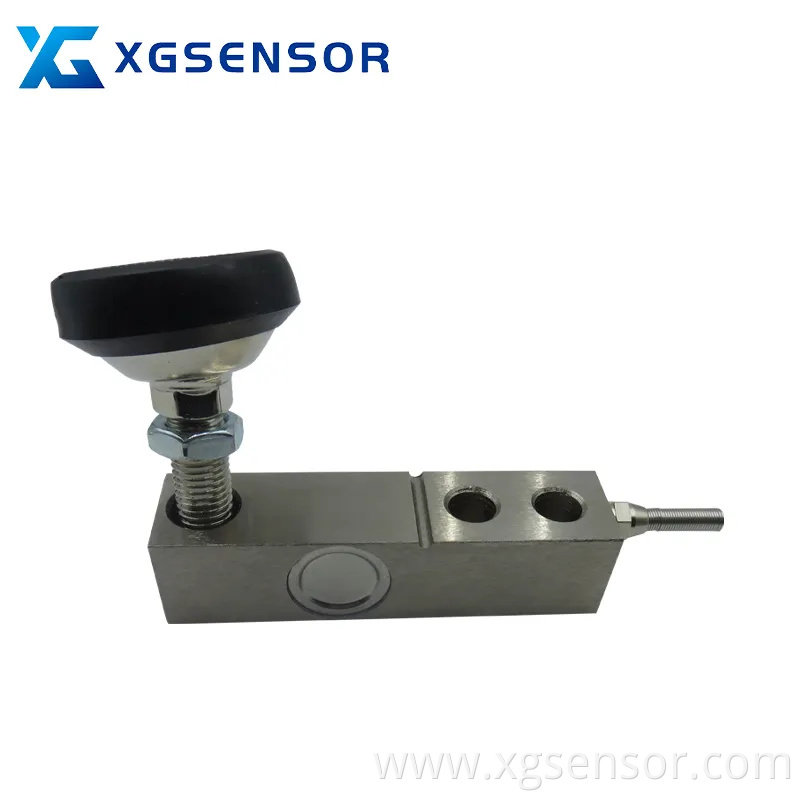
How Material Affects Accuracy
Many people assume that one material automatically provides better accuracy than another. In reality, the accuracy of a load cell sensor depends more on its design, manufacturing quality, machining precision, and calibration than on the material itself.
Both aluminum and stainless steel can achieve extremely high accuracy when properly engineered. The choice of material mainly affects durability, environmental resistance, and load capacity rather than measurement precision alone.
For most commercial weighing systems, aluminum provides more than enough accuracy. For industrial applications requiring harsh environmental protection, stainless steel offers the best balance between precision and durability.
Choosing the Best Material for Your Application
Selecting the right material for a single point load cell depends on several factors.
If your weighing equipment is used indoors in clean, dry environments, aluminum is usually the most economical and practical option. It delivers excellent accuracy while keeping equipment lightweight and affordable.
If your application involves frequent cleaning, water exposure, high humidity, or corrosive chemicals, stainless steel is a better investment because it provides greater protection against environmental damage.
For heavier industrial weighing systems that experience high loads or mechanical stress, alloy steel may also be considered if proper corrosion protection is provided.
Other Factors to Consider
Besides material, several other specifications should be evaluated before choosing a load cell sensor, including:
- Rated capacity
- Accuracy class
- Platform size
- Protection rating (IP65, IP67, IP68, or IP69K)
- Operating temperature range
- Cable length
- Output sensitivity
- Installation requirements
Considering all of these factors together ensures the selected single point load cell delivers optimal performance for your specific application.
Conclusion
The best material for a single point load cell depends on where and how it will be used. Aluminum remains the most popular choice because it combines high accuracy, lightweight construction, and cost-effectiveness, making it ideal for commercial weighing equipment. Stainless steel is the preferred material for demanding industrial environments that require superior corrosion resistance and long-term durability, while alloy steel provides additional strength for specialized heavy-duty applications. By selecting the appropriate material and a high-quality load cell sensor, businesses can achieve reliable weighing performance, improved operational efficiency, and long-lasting measurement accuracy.