

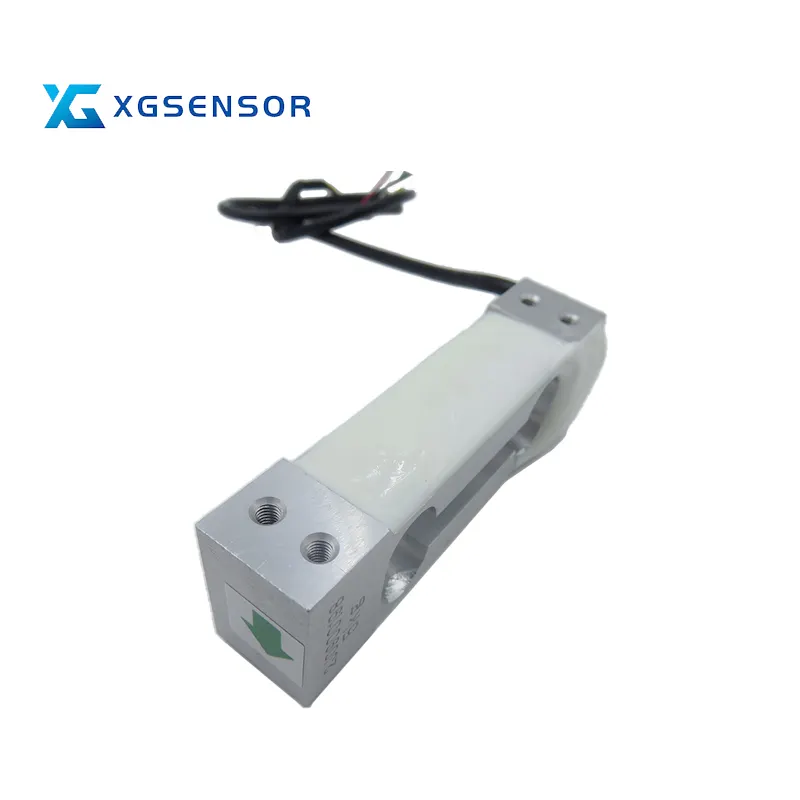
Single Point Load Cells are commonly associated with compact weighing platforms or bench scales,but many engineers and system designers wonder whether they can be applied in multi-platform systems.The short answer is yes—Single Point Load Cells can be used in multi-platform configurations under specific conditions,provided that load distribution and structural design are carefully managed.
The main feature of Single Point Load Cells is their ability to provide accurate measurements even when the load is placed off-center.This makes them ideal for single-platform weighing,where one sensor handles the entire load.However,when used in a multi-platform setup—such as a large conveyor system,pallet scale,or modular weighing station—several Single Point Load Cells may work together to measure different sections of the load.
To achieve accurate results,each load cell must be properly calibrated and balanced within the system.Using junction boxes with signal trimming can help equalize output among multiple sensors.It’s also important to ensure that each platform section transfers the load vertically and evenly to its corresponding load cell,avoiding lateral forces that could distort the readings.
Another consideration is synchronization.Multi-platform systems typically require signal processing electronics or digital controllers capable of combining and averaging signals from multiple Single Point Load Cells.Advanced load cell amplifiers or summing units can handle this task efficiently,maintaining stable and consistent output across all platforms.
Environmental and structural stability also play a vital role.Temperature differences,vibration,and mechanical misalignment can cause signal drift or calibration deviation.Therefore,regular inspection,recalibration,and use of high-quality load cells with good temperature compensation are essential for reliable multi-platform operation.
In summary,Single Point Load Cells can indeed be integrated into multi-platform weighing systems when designed correctly.Their compact structure,high accuracy,and cost-effectiveness make them a versatile solution for both single and multi-platform applications.With proper system integration and calibration,these sensors can deliver precise performance even in complex industrial environments.