

When buyers evaluate weighing systems for industrial platforms, batching machines, tank weighing, packaging lines, and automated production, one of the most important questions is the achievable accuracy of a Shear Beam Load Cell. Modern manufacturing requires stable, repeatable, and long-term precision, especially when output quality, waste reduction, and production efficiency depend on precise weight readings. A high-quality Shear Beam Load Cell is designed specifically to meet these expectations. Whether you are using a Single-Ended Shear Beam Load Cell on a floor scale or a Stainless Steel Shear Beam Load Cell in a harsh industrial environment, accuracy is a key indicator of sensor performance.
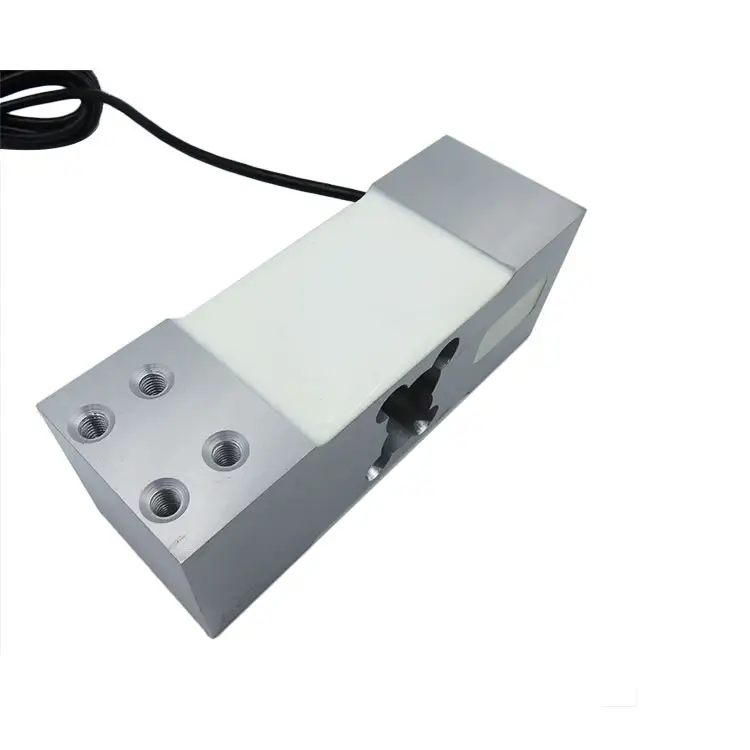
A premium Shear Beam Load Cell typically offers accuracy levels ranging from 0.02% to 0.05% of full scale, depending on its construction and design. This means that even with a 5,000 kg capacity, you can expect a deviation of only 1–2.5 kg across the entire weighing range. In many industrial applications, this level of precision is more than sufficient to ensure consistent product quality. The internal strain gauge technology responds to minimal deformation under load, converting mechanical force into precise electrical signals. Manufacturers who adopt precision foil strain gauges and advanced temperature compensation technology typically deliver sensors with greater long-term stability.
Stability is especially important because a Shear Beam Load Cell is often exposed to continuous loading cycles. When the sensor is built with high-grade alloy steel or stainless steel, its linearity and repeatability remain steady even after years of operation. Stainless Steel Shear Beam Load Cell designs are known for maintaining accuracy in environments exposed to water, chemicals, humidity, and dust. Their ability to resist corrosion prevents drift caused by environmental effects, ensuring that the sensor remains within its stated accuracy limits for a longer period of time. This is exactly why many food processing plants, chemical factories, and outdoor weighing systems choose stainless-steel models.
Temperature effects also influence the accuracy of a Shear Beam Load Cell. High-quality versions are equipped with advanced compensation circuits that automatically correct signal fluctuations caused by temperature changes. A typical operating temperature range is −20°C to +60°C, and good temperature compensation helps the sensor maintain stable output even during daily production shifts. Many users find that a Single-Ended Shear Beam Load Cell offers excellent performance in dynamic weighing operations due to its balanced mechanical structure, providing both high accuracy and strong resistance to side forces.
Accuracy also depends on correct installation and mounting accessories. Even the best Shear Beam Load Cell can show errors if the installation surface is not level or if the mounting hardware is not properly aligned. To achieve full accuracy, the load must be applied vertically to the sensing axis. This is why high-end manufacturers provide dedicated mounting kits that minimize vibration, prevent side-loading, and keep the sensor perfectly aligned during operation. After installation, proper calibration ensures the load cell performs at 100% accuracy. Using a digital indicator or controller with matched sensitivity can also reduce deviations.
For buyers choosing between alloy steel and Stainless Steel Shear Beam Load Cell designs, the accuracy difference may not be dramatic, but durability directly affects long-term accuracy stability. Stainless steel models maintain precision longer in extreme environments where corrosion and moisture are potential risks. Alloy steel versions deliver excellent accuracy too, but they require protective coatings and careful maintenance. In both cases, premium Single-Ended Shear Beam Load Cell designs remain one of the most accurate and cost-effective options for industrial weighing.
The accuracy of a Shear Beam Load Cell is also impacted by load distribution. In a typical 4-load-cell platform scale, each unit shares part of the load. High-quality sensors ensure that weight distribution is balanced, providing a stable reading even if the load is not perfectly centered. This reduces the risk of inaccurate outputs and keeps the weighing system functioning reliably in real-world conditions.
Finally, long-term drift is a major consideration for buyers. With high-quality strain gauges, excellent sealing, and precision engineering, a Shear Beam Load Cell can maintain stable accuracy for years with minimal recalibration. Regular maintenance, proper cleaning, and protection against overload further extend its accuracy life. When selecting weighing equipment, investing in a well-engineered Shear Beam Load Cell—especially a Single-Ended Shear Beam Load Cell or Stainless Steel Shear Beam Load Cell—ensures high accuracy, reliable stability, and long-term performance that meets demanding industrial standards.