

Buyers choosing industrial weighing equipment often want to understand the true lifespan of a Shear Beam Load Cell,especially when the sensor is exposed to long-term heavy loading conditions.A load cell is a long-term investment that directly affects productivity,measurement consistency,and the overall reliability of a weighing system.The typical lifespan of a high-quality Shear Beam Load Cell ranges from 5 to 15 years under continuous heavy use,and in well-maintained systems,some last even longer.This longevity is influenced by material quality,load cycle frequency,installation conditions,and environmental factors.
A Shear Beam Load Cell is engineered to withstand repeated bending stresses.Unlike compression load cells,a shear beam structure distributes force across the sensing area,making it highly durable even in dynamic operations.High-grade versions,such as a Stainless Steel Shear Beam Load Cell,provide outstanding endurance.Stainless steel not only resists corrosion but also maintains structural strength after millions of load cycles.This is crucial for industries like food processing,outdoor weighing platforms,shipping terminals,and chemical applications where moisture and harsh environments are unavoidable.
For applications using a Single-Ended Shear Beam Load Cell,lifespan is generally excellent because it handles off-center loading conditions better than many other load cell types.This structure helps maintain stable performance even when loads are not perfectly positioned on the weighing platform.In heavy-load environments such as floor scales,pallet scales,or tank weighing systems,durability is essential.A premium Single-Ended Shear Beam Load Cell is typically fatigue-rated,meaning it has been tested to withstand millions of repeated load applications without loss of accuracy.
However,load cell lifespan is not determined by material alone.A critical factor is the percentage of load applied continuously.When a Shear Beam Load Cell is used at 60–80%of its rated capacity,it generally lasts significantly longer than sensors that are consistently pushed to their maximum rated load.Overloading,shock loading,or uneven force distribution can reduce lifespan dramatically.Even the strongest Stainless Steel Shear Beam Load Cell will experience early fatigue if repeatedly subjected to sudden impacts or extreme forces.To extend lifespan,manufacturers recommend using a capacity 20–30%higher than the expected working load.
Environmental conditions also influence long-term durability.Moisture,chemicals,vibration,and dust can degrade protective seals,affecting both lifespan and accuracy.High-quality Shear Beam Load Cell products often feature hermetically welded seals or IP67/IP68 protection,which significantly improves endurance in harsh environments.Stainless steel models offer additional protection due to their corrosion-resistant properties.In contrast,alloy-steel sensors rely heavily on protective coatings,so their lifespan may be reduced if coatings wear off over time.
Proper installation has a major impact as well.When the mounting surface is uneven or misaligned,side forces can cause premature strain on the sensor body.This leads to metal fatigue and shortens the usable life.Using manufacturer-recommended mounting kits helps prevent lateral movement,vibration damage,and external mechanical stress.Once installed,calibration and regular inspection help maintain long-term stability.Debris under the scale base,loose bolts,or damaged cables can all contribute to reduced lifespan if left unaddressed.
Cable integrity is another often-overlooked factor.A Shear Beam Load Cell operates using millivolt-level signals,so any damage to the cable—such as cuts,moisture ingress,or bending stress—can cause false signals,drift,or complete sensor failure.High-quality Stainless Steel Shear Beam Load Cell designs usually incorporate durable armored cables or reinforced sheathing to extend operational life.Keeping the cable protected from forklifts,dragging,or compression can significantly increase sensor longevity.
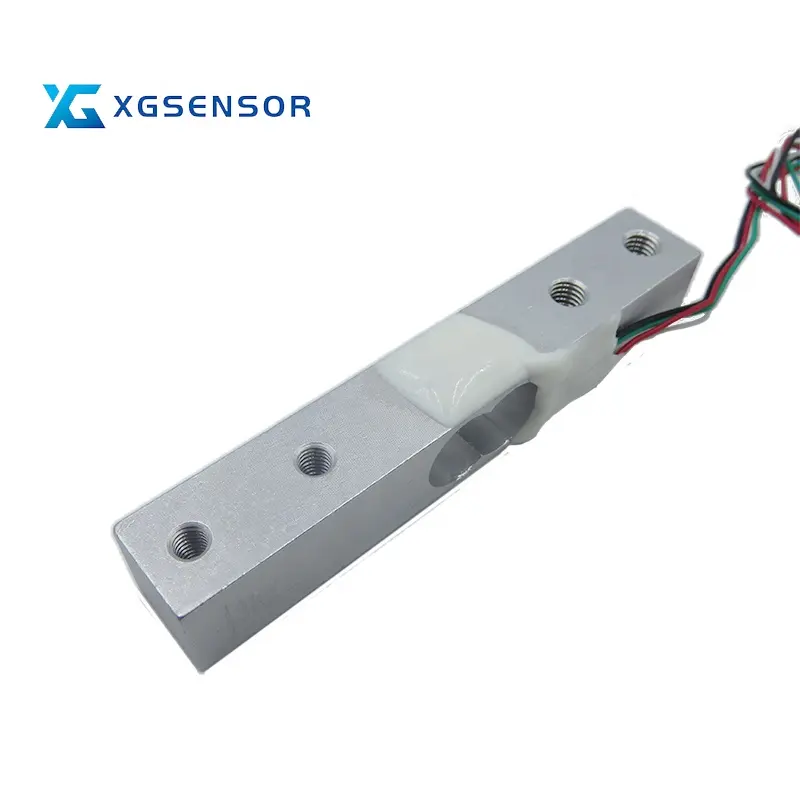
Maintenance practices play a huge role in determining lifespan under heavy load.A well-maintained Shear Beam Load Cell can operate reliably for more than a decade.Routine cleaning,periodic calibration,and checking for mechanical interference prolong operational life.In demanding environments,users often see the best performance from Stainless Steel Shear Beam Load Cell models due to their natural resistance to corrosion and mechanical wear.
In real-world applications,many Shear Beam Load Cell units continue working beyond their expected lifespan because they were properly installed,slightly oversized for the intended workload,and operated within recommended limits.When users combine correct installation,stable loading,and reasonable environmental protection,the sensor can perform reliably for many years.For businesses that rely on consistent and accurate weighing,selecting high-quality Single-Ended Shear Beam Load Cell or Stainless Steel Shear Beam Load Cell ensures not only superior performance but also extended service life under continuous heavy load conditions.