

The urea or DEF system in modern diesel vehicles depends heavily on the accuracy of the Urea Pressure Sensor,because it controls the pressure feedback that the SCR system uses to regulate injection.When this sensor becomes weak,contaminated,or electrically unstable,the entire after-treatment system can fail,leading to SCR warnings,reduced power,increased fuel consumption,or even limp mode.Understanding how to test a Urea Pressure Sensor correctly helps technicians and buyers avoid unnecessary part replacements and diagnose the root cause of DEF system failures.
To begin testing,it is essential to understand how the Urea Pressure Sensor functions.It is a three-wire pressure transducer that converts real-time DEF line pressure into an electrical signal,usually between 0.5–4.5V.When the DEF pump begins priming,the pressure sensor detects the rising pressure and relays this data to the ECU.If its output voltage does not match the corresponding pressure value,the ECU immediately triggers codes such as P20E8(low pressure),P2047,or P205B.This is why accurate testing is crucial.Testing the Urea Pressure Sensor requires a systematic approach involving electrical inspection,mechanical pressure checks,and live data verification.
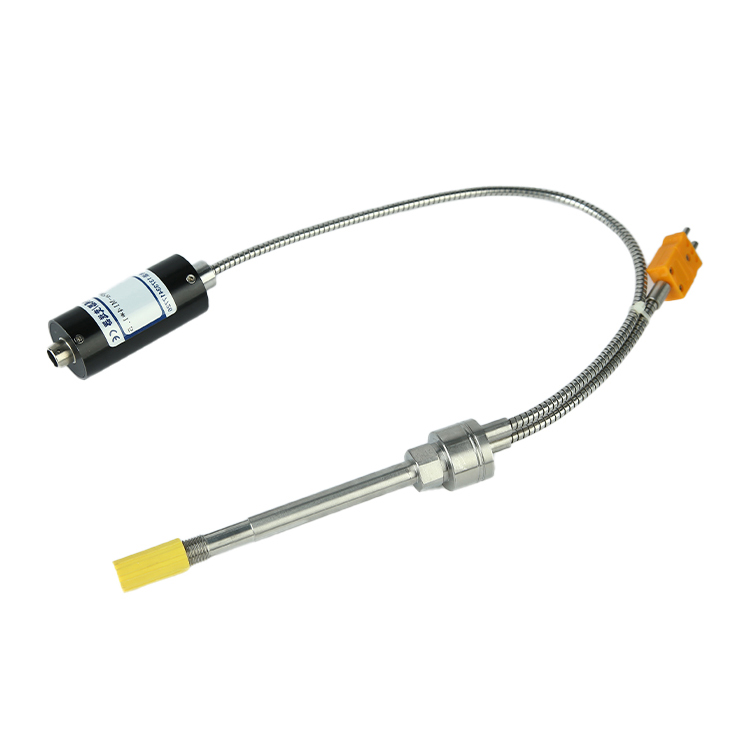
The first step is to visually examine the sensor and its connector.DEF crystallization is a common cause of false readings.Dried DEF around the Urea Pressure Sensor can easily block the sensor or corrode the connector pins,causing intermittent voltage drops.Cleaning the sensor body and checking for broken wires,loose pins,or DEF leakage is essential before deeper testing.Many“sensor failures”are simply connection problems.
After the inspection,verifying the sensor’s voltage supply using a multimeter is the next task.The reference wire should show around 5V,and the ground wire should have stable continuity.If these two values are incorrect,the Urea Pressure Sensor is rarely the issue—the wiring harness or ECU becomes the primary suspect.Once the supply is verified,the signal wire must be tested.With the engine off,the sensor typically shows about 0.5–1.0V(no pressure).When the pump primes,the voltage should smoothly increase.A jumpy reading or a sudden drop indicates sensor failure.
The most accurate method for testing is to compare live OBD data with actual mechanical pressure.This requires connecting a diagnostic tool to monitor the Urea Pressure Sensor values while attaching a mechanical gauge to the DEF line.When the pump starts,both readings should increase proportionally.If the ECU displays pressure but the mechanical gauge shows none,the sensor is stuck.If the mechanical gauge shows pressure but ECU shows zero or very low output,the sensor is sending inaccurate feedback.In either case,replacing the Urea Pressure Sensor is necessary.
Another important test is resistance and continuity measurement.Although pressure sensors normally should not be tested by measuring resistance,extreme cases of internal short-circuiting can be identified by comparing readings with OEM specifications.A defective sensor often shows erratic resistance values that change even without applying pressure.This inconsistency suggests internal diaphragm degradation or fluid contamination.
In many vehicles,the ECU runs an automatic priming cycle.During this cycle,technicians can listen for the pump sound while monitoring the Urea Pressure Sensor output.If the pump runs for long periods without building pressure,the root cause may not be the sensor but rather a failing pump,clogged filter,frozen DEF,or line blockage.Therefore,testing should always include system-wide inspection.A Urea Pressure Sensor failure is often a symptom,not the root cause.
Practical testing also involves examining pressure behavior under different conditions.At idle,the system should maintain stable pressure.If the reading fluctuates rapidly or shows sudden spikes,the sensor diaphragm may be damaged.If the pressure slowly drops even when the pump is functioning,internal leaks are possible.For fleet vehicles or trucks operating in cold environments,thermal stress can also reduce sensitivity of the Urea Pressure Sensor.Many cold-region trucks show pressure reading lag when the DEF temperature is low.
Testing results should always be evaluated in context.A sensor that outputs slightly unstable readings may still be usable,but if the system frequently triggers codes or regeneration fails,replacing the Urea Pressure Sensor becomes a cost-effective decision.Compared with downtime or SCR replacement,a new sensor is inexpensive and restores system reliability.
In summary,testing a Urea Pressure Sensor involves a combination of visual inspection,voltage testing,OBD live-data comparison,mechanical pressure checks,and system behavior analysis.Buyers searching for replacements should choose suppliers that offer stable signal output,corrosion-resistant materials,and OEM-level accuracy.A well-tested and high-quality Urea Pressure Sensor ensures long-term SCR stability,compliance with emissions regulations,and optimal diesel engine performance.