

In many industrial and outdoor applications,exposure to moisture is unavoidable.Rain,humidity,washdown processes,condensation,and even full immersion can all affect sensor performance.This leads to a common and important question:are load cells waterproof?
The short answer is that not all load cells are waterproof,but many are specifically designed to operate reliably in wet or harsh environments.The level of water resistance depends on the load cell’s design,materials,sealing methods,and ingress protection rating.
A load cell typically contains strain gauges bonded to a metal body.These strain gauges and their wiring are highly sensitive to moisture.If water penetrates the load cell housing,it can cause signal drift,corrosion,insulation breakdown,and eventual failure.This is why waterproofing is a major consideration in load cell manufacturing.
Water resistance in load cells is commonly defined using IP(Ingress Protection)ratings.An IP rating consists of two digits:the first indicates protection against solid particles,and the second indicates protection against liquids.For example,an IP65 load cell is dust-tight and protected against water jets,while an IP68 load cell can withstand continuous immersion in water under specified conditions.
Many industrial load cells are rated IP67 or IP68,making them suitable for washdown environments such as food processing plants,pharmaceutical facilities,and outdoor weighing systems.These waterproof load cells are sealed using advanced techniques,including laser welding,hermetic sealing,and specialized sealing compounds.
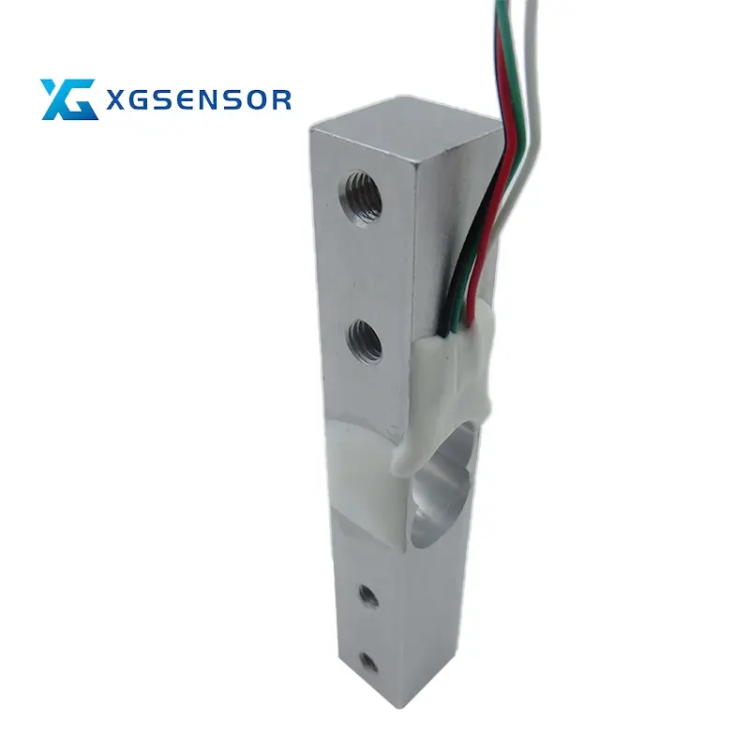
Material selection plays a key role in waterproof performance.Stainless steel load cells are widely used in wet environments because of their corrosion resistance and ability to maintain structural integrity over time.Aluminum load cells,while lighter and more cost-effective,are generally less suitable for waterproof applications unless additional protective coatings are applied.
Cable entry points are one of the most vulnerable areas for water ingress.High-quality waterproof load cells use molded or welded cable exits with strain relief to prevent moisture penetration.Some designs also allow for detachable waterproof connectors,which are useful in systems requiring frequent maintenance or replacement.
It is important to understand that“waterproof”does not always mean“submersible.”Some load cells are designed to resist splashing or washdown but are not intended for long-term immersion.Always check the manufacturer’s specifications to determine whether a load cell can be used underwater and under what conditions.
Environmental factors such as temperature changes can also affect waterproof performance.Rapid temperature fluctuations can cause condensation inside a load cell if sealing is inadequate.Hermetically sealed load cells are particularly effective in preventing this issue,making them ideal for outdoor installations and cold-storage environments.
Proper installation and maintenance are just as important as the load cell’s inherent waterproof design.Even the best waterproof load cell can fail if cables are damaged,seals are compromised,or mounting hardware allows water to accumulate.Regular inspection and correct cable routing help maintain long-term reliability.
Waterproof load cells are commonly used in applications such as truck scales,tank weighing systems,marine equipment,agricultural machinery,and outdoor industrial platforms.In these scenarios,exposure to water is unavoidable,and choosing a standard,non-sealed load cell would lead to frequent failures and inaccurate readings.
When selecting a load cell for wet environments,buyers should consider more than just the IP rating.Long-term corrosion resistance,sealing technology,cable quality,and real-world operating conditions all influence performance.Consulting with an experienced load cell manufacturer or supplier can help ensure the correct choice.
In summary,many load cells are designed to be waterproof,but the level of protection varies significantly.Understanding IP ratings,materials,and sealing methods is essential when choosing a load cell for moisture-prone environments.A properly selected waterproof load cell ensures stable measurements,reduced maintenance,and reliable operation even in the harshest conditions.