

In industrial weighing and force measurement applications,overload is one of the most common reasons for load cell failure.Understanding overload protection is essential for anyone selecting,installing,or maintaining a load cell,especially in environments where unexpected forces or misuse may occur.Overload protection directly affects the accuracy,durability,and service life of a load cell.
A load cell is designed to convert mechanical force into an electrical signal.While it can accurately measure force within its rated capacity,excessive force beyond that range can permanently damage the sensing element.This is why overload protection is a critical feature in modern load cell design.
Overload protection refers to the load cell’s ability to withstand forces that exceed its rated capacity without suffering permanent deformation or loss of accuracy.Most load cells are engineered with specific overload limits,usually expressed as a percentage of the rated load.For example,a typical industrial load cell may have a safe overload of 120%to 150%of its rated capacity,and an ultimate overload rating of around 200%.
The difference between safe overload and ultimate overload is important.Safe overload indicates the maximum load that a load cell can experience without permanent damage.Once the force is removed,the load cell should return to normal operation with its original accuracy intact.Ultimate overload,on the other hand,represents the point at which structural failure or irreversible deformation occurs.Exceeding this limit will almost certainly destroy the load cell.
Mechanical overload protection is one of the most common protection methods.In this approach,physical components such as overload stops,limit bolts,or mechanical buffers are integrated into the load cell or mounting structure.These components physically prevent the sensing element from being overstressed when excessive force is applied.Mechanical protection is especially common in compression load cells used in tank weighing systems,truck scales,and heavy industrial platforms.
Another form of overload protection comes from structural design.High-quality load cells are engineered using optimized geometry and high-strength materials to distribute stress evenly across the sensing element.Stainless steel and alloy steel load cells often provide better overload resistance compared to aluminum load cells,making them suitable for harsh industrial environments.
Electrical overload protection also plays a role,although it does not protect against mechanical damage directly.Signal conditioning electronics,such as amplifiers and indicators,can include limit detection or alarm functions.These systems alert operators when loads approach dangerous levels,helping prevent accidental overloading of the load cell during operation.
Overload protection is particularly important in applications with dynamic or impact loads.Conveyor systems,filling machines,and automated production lines often generate sudden force spikes.Without sufficient overload protection,these short-duration forces can damage a load cell even if the average load appears to be within range.Selecting a load cell with a higher safety overload rating is recommended in such cases.
Improper installation can also reduce the effectiveness of overload protection.Uneven mounting surfaces,misalignment,or side loading can introduce unintended forces that bypass the designed load path.Even a load cell with excellent overload protection can fail prematurely if installed incorrectly.Proper mounting accessories and alignment are essential to ensure that overload forces are absorbed as intended.
In real-world use,overload incidents often occur during calibration,maintenance,or system startup.Applying calibration weights incorrectly or forgetting to remove mechanical supports can result in unexpected overload.For this reason,many manufacturers recommend selecting a load cell with a capacity slightly higher than the maximum expected working load,providing an additional margin of safety.
When choosing a load cell,buyers should carefully review overload specifications in the technical datasheet.Key parameters include safe overload,ultimate overload,and recommended maximum working load.These values indicate how well the load cell can tolerate abnormal conditions and are especially important in heavy-duty industrial applications.
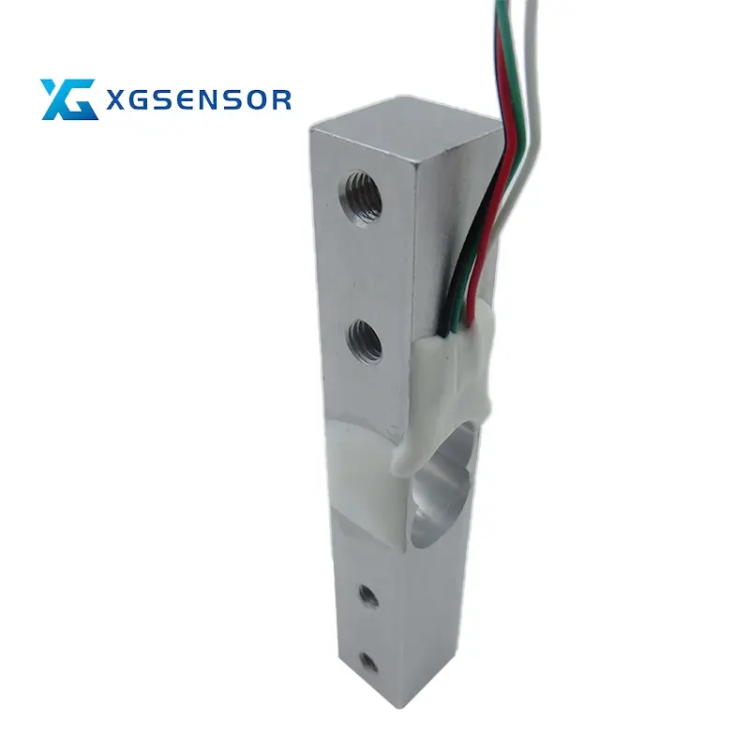
In conclusion,overload protection is not just a technical detail—it is a critical factor that determines the reliability and lifespan of a load cell.By understanding overload ratings,protection mechanisms,and proper installation practices,users can significantly reduce the risk of damage and downtime.Selecting a load cell with appropriate overload protection ensures stable performance,accurate measurements,and long-term operational safety in demanding environments.