

During production, tension sensors are commonly installed in key positions such as payoff units, drawing machines, annealing lines, extrusion lines, and take-up reels. As the wire moves through these stages, the sensor continuously measures the mechanical force acting on the material. This real-time data is sent to a control system, which automatically adjusts motor speed, brake force, or roller resistance to maintain a stable tension level.
In wire drawing processes, for example, tension sensors help ensure that the metal wire is pulled with consistent force through multiple dies. If the tension is too high, the wire may snap; if too low, it can lead to poor diameter accuracy. In extrusion coating lines, tension control ensures that the insulation layer is applied evenly without wrinkles or displacement. This is especially important for high-performance cables used in automotive, aerospace, and communication industries.
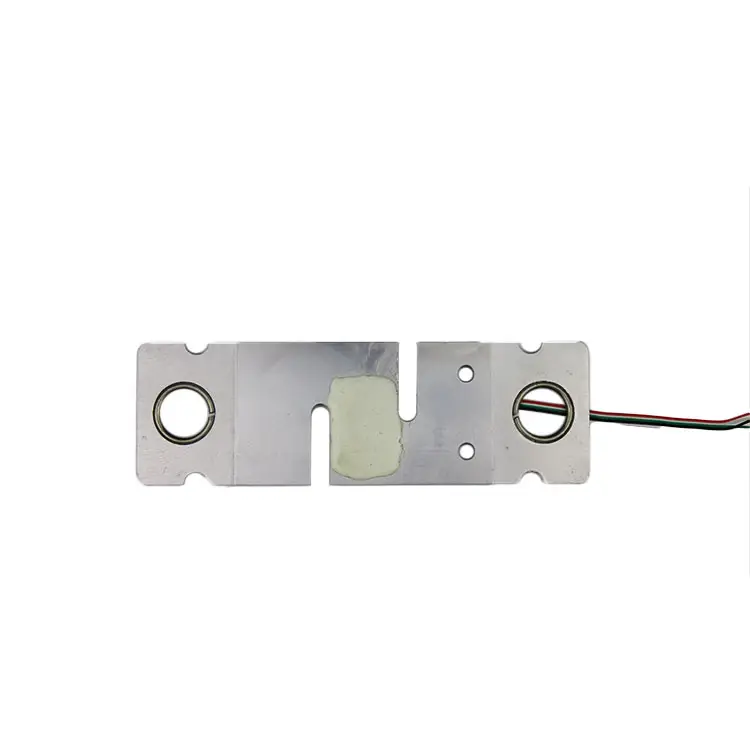
Modern tension control systems often combine load cell-based sensors with digital controllers, allowing precise feedback and fast response. The sensor converts mechanical force into an electrical signal, typically in mV/V or digital output, which is then processed to make real-time adjustments. This closed-loop control system significantly improves production efficiency and reduces material waste.
Additionally, tension sensors contribute to quality consistency in high-speed production environments. As cable lines operate at increasing speeds, even slight tension fluctuations can cause major defects. By integrating sensors into automated systems, manufacturers can achieve smoother operation, higher yield rates, and better product reliability.
Overall, tension sensors are a core component in modern cable and wire production lines. They ensure precise force control, improve product quality, reduce downtime, and support automation in industrial manufacturing processes.