

Understanding Force Sensor Output Signals
A force sensor itself measures mechanical force, but control systems and computers cannot directly interpret physical pressure, tension, or compression. To make the measurement useful, the sensor converts the force into an electrical signal. The type of output signal depends on the sensing technology, the level of signal conditioning built into the sensor, and the communication requirements of the application.
Modern force sensors may provide analog, digital, or wireless outputs, each offering unique advantages in terms of accuracy, transmission distance, noise resistance, and ease of integration.
Analog Voltage Outputs
Voltage output is one of the most common signal types used in force sensing applications. In this configuration, the sensor produces a voltage that changes proportionally with the applied force. Common voltage ranges include 0–5V, 0–10V, ±5V, and ±10V.
Voltage outputs are widely used because they are simple to implement and compatible with many industrial controllers and data acquisition systems. As the force increases, the output voltage changes accordingly, allowing the control system to calculate the measured force.
These sensors are commonly found in laboratory equipment, automated machinery, and production line monitoring systems. However, voltage signals can be affected by electrical noise, especially when transmitted over long cable distances. For this reason, they are often preferred in installations where the sensor is located relatively close to the control equipment.
Analog Current Outputs
Current output signals, particularly 4–20mA, are extremely popular in industrial environments. Unlike voltage signals, current signals are less vulnerable to electromagnetic interference and signal degradation over long distances.
In a typical 4–20mA system, the minimum force corresponds to 4mA and the maximum force corresponds to 20mA. This format allows the system to detect wiring faults because a signal below 4mA often indicates a problem rather than a valid measurement.
Current output force sensors are widely used in factory automation, process control, heavy machinery, and remote monitoring applications where reliability is essential. Their strong resistance to electrical noise makes them ideal for harsh industrial environments.
Millivolt Outputs from Strain Gauge Sensors
Many force sensors are based on strain gauge technology. These sensors often provide a raw millivolt-per-volt (mV/V) output signal. Rather than producing a standardized voltage or current output, the sensor generates a very small electrical signal proportional to the applied force.
For example, a force sensor rated at 2mV/V with a 10V excitation voltage will produce approximately 20mV at full scale. Because these signals are extremely small, they typically require amplification and signal conditioning before they can be processed by control systems.
Despite this requirement, mV/V outputs are highly valued because they provide excellent measurement accuracy and sensitivity. They are commonly used in precision testing equipment, force measurement systems, load cells, and scientific research applications.
Digital Communication Outputs
As industrial systems become increasingly connected, digital output force sensors are becoming more common. Instead of transmitting an analog signal, these sensors convert measurements into digital data that can be directly communicated to controllers, computers, or industrial networks.
Common digital interfaces include RS232, RS485, USB, CAN Bus, Modbus RTU, Ethernet, SPI, and I²C. These communication methods allow force data to be transmitted accurately with minimal signal loss.
Digital force sensors offer several advantages. They reduce susceptibility to electrical interference, support long-distance communication, and often provide additional diagnostic information. Many advanced systems can also transmit calibration data, temperature compensation information, and sensor status through the same communication channel.
Industries such as robotics, automated assembly, aerospace, and smart manufacturing frequently use digital force sensors to achieve higher levels of control and data analysis.
Wireless Output Signals
Wireless technology has expanded the possibilities for force measurement. Some modern force sensors can transmit data wirelessly using Bluetooth, Wi-Fi, Zigbee, or LoRa communication protocols.
Wireless force sensors eliminate the need for extensive cabling, making installation easier and reducing maintenance costs. They are particularly useful in applications involving moving equipment, rotating machinery, structural monitoring, or locations where wiring is difficult.
For example, wireless force sensors may be used to monitor loads on bridges, measure forces in remote industrial facilities, or collect data from mobile testing equipment. As Industrial Internet of Things (IIoT) technologies continue to grow, wireless force sensing solutions are becoming increasingly important.
Frequency and PWM Outputs
Some specialized force sensors provide frequency-based or Pulse Width Modulation (PWM) outputs. In these systems, the measured force is represented by changes in signal frequency or pulse width rather than voltage or current levels.
These outputs can offer excellent resistance to electrical noise and are often used in embedded systems, automotive electronics, and specialized industrial applications. Because the information is encoded in timing characteristics rather than signal amplitude, these sensors can maintain accuracy even in electrically noisy environments.
Choosing the Right Output Signal
Selecting the best output signal depends on the requirements of the application. For short-distance industrial installations, voltage outputs may provide a simple and cost-effective solution. For long-distance transmission and harsh environments, current outputs such as 4–20mA are often preferred. Precision measurement systems frequently use mV/V outputs because of their high accuracy, while digital outputs are ideal for advanced automation and Industry 4.0 applications.
Wireless outputs may be the best choice when flexibility, mobility, or remote monitoring is required. Understanding the strengths and limitations of each signal type helps ensure reliable performance and seamless integration with existing systems.
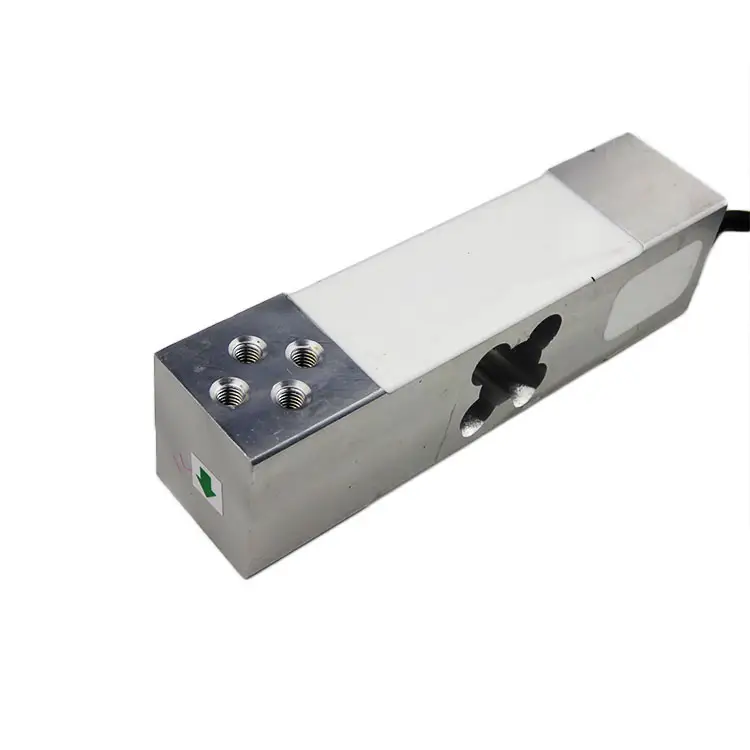
Force sensors can provide a variety of output signals, including analog voltage, analog current, millivolt, digital, wireless, frequency, and PWM outputs. Each signal type is designed to meet specific operational requirements and environmental conditions. While traditional strain gauge force sensors commonly use mV/V outputs, many modern industrial force sensors offer standardized voltage, current, or digital communication interfaces for easier integration.
By carefully considering factors such as transmission distance, environmental conditions, system compatibility, and measurement accuracy, users can select a force sensor output signal that delivers reliable performance and supports the long-term success of their application.