

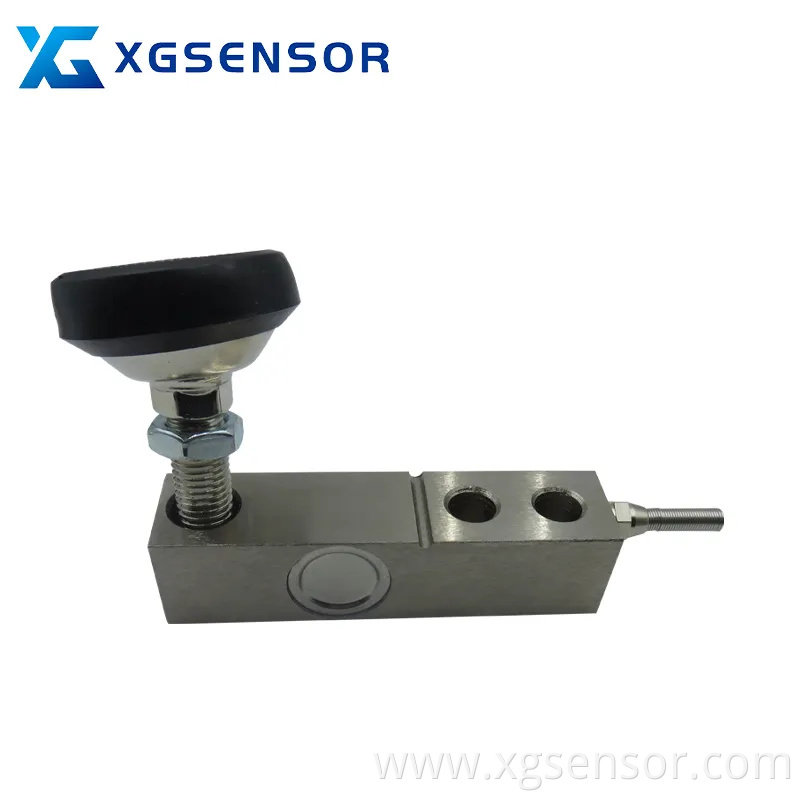
When selecting a force measurement solution, understanding the differences between Miniature Load Cells and force sensors can help engineers, equipment manufacturers, and system designers make informed decisions. Although the two terms are sometimes used interchangeably, they represent different concepts. A Miniature Load Cell belongs to the force sensor family, but not every force sensor is a load cell.
A Mini Load Cell is specifically designed to measure static or dynamic loads by converting mechanical deformation into an electrical output. Most Miniature Load Cells use strain gauge technology, which provides stable performance, excellent repeatability, and reliable long-term operation. They are widely used in weighing systems, automated production lines, robotics, medical devices, and laboratory instruments where accurate force measurement is essential.
A force sensor is a broader term that includes various technologies for detecting force. Besides strain gauge-based load cells, force sensors may use piezoelectric, capacitive, hydraulic, pneumatic, or optical sensing methods. Different sensor technologies are suitable for different applications. For example, piezoelectric force sensors perform well in dynamic force measurement, while strain gauge load cells are commonly selected for continuous and highly accurate load monitoring.
One of the primary differences lies in measurement purpose. Miniature Load Cells are mainly designed to measure weight, compression, or tension with high precision. They provide calibrated outputs that can be directly integrated into control systems or weighing equipment. In contrast, force sensors may be designed to detect contact force, pressure, impact, or tactile feedback, depending on the sensing principle used.
Another important difference is accuracy. A Precision Load Cell is engineered to deliver consistent measurement results even under demanding operating conditions. High-quality Miniature Load Cells feature low nonlinearity, minimal hysteresis, and excellent repeatability. These characteristics make them suitable for precision manufacturing, calibration equipment, scientific research, and automated testing systems. Some general force sensors prioritize fast response or sensitivity instead of long-term measurement stability.
Size is another factor influencing product selection. A Micro Load Cell is developed for applications where installation space is extremely limited. Despite its compact dimensions, it can still provide reliable measurement performance. Similarly, a Small Load Cell offers an excellent balance between compact size and load capacity, making it suitable for portable equipment, medical instruments, and compact automation devices.
Modern industrial equipment continues to become smaller and more integrated, increasing the demand for a Compact Load Cell. Compact designs simplify installation while maintaining excellent mechanical strength and measurement performance. Engineers often choose Compact Load Cell solutions when designing robotics, semiconductor equipment, aerospace testing systems, or precision assembly machines where every millimeter of space matters.
The sensing technology also affects performance characteristics. Most Miniature Load Cells rely on strain gauges bonded to a metal elastic element. When force is applied, the metal deforms slightly, changing the electrical resistance of the strain gauges. This change is converted into an output signal proportional to the applied load. Many other force sensors use alternative technologies that may offer advantages in specific environments but may not provide the same combination of accuracy, stability, and durability as strain gauge-based load cells.
Application requirements should always guide the selection process. If the goal is highly accurate weight measurement, compression testing, or tension monitoring, Miniature Load Cells are often the preferred solution. If the application involves vibration analysis, impact detection, or rapidly changing dynamic forces, another type of force sensor may provide better performance. Understanding the expected load range, environmental conditions, mounting method, and required output signal helps ensure the correct product is selected.
Maintenance and calibration are also important considerations. A Precision Load Cell generally requires periodic calibration to maintain measurement accuracy throughout its service life. Proper installation, overload protection, and environmental sealing contribute to reliable long-term performance. Selecting a high-quality Mini Load Cell from an experienced manufacturer can reduce maintenance requirements and improve measurement consistency.
As automation, smart manufacturing, and precision testing continue to expand across industries, both Miniature Load Cells and force sensors play increasingly important roles. Their functions overlap in many applications, but understanding their technical differences helps engineers select the most suitable sensing solution. By considering measurement accuracy, sensing technology, installation space, and operating conditions, users can confidently choose between a Micro Load Cell, Small Load Cell, Compact Load Cell, or another type of force sensor that best matches their project's performance requirements.