

Why Torque Sensor Health Matters
Modern Torque Sensors play a vital role in industrial automation, automotive testing, robotics, aerospace, and manufacturing. They provide the precise torque data required to monitor machine performance, verify product quality, and improve production efficiency.
When a torque sensor begins to fail, inaccurate measurements may lead to poor product consistency, unexpected equipment damage, failed quality inspections, or incorrect engineering decisions. Identifying faults early helps reduce maintenance costs and minimizes production interruptions.
A professional Torque Sensor Manufacturer usually recommends periodic inspections and scheduled calibration to maintain long-term measurement accuracy.
Common Signs of a Faulty Torque Sensor
Several warning signs may indicate that a torque sensor is no longer performing correctly.
Unstable Measurement Readings
One of the most common symptoms is fluctuating output while the applied torque remains constant.
If the displayed torque changes continuously without any change in load, possible causes include:
- Damaged strain gauges
- Electrical interference
- Loose connectors
- Internal circuit failure
- Moisture contamination
Stable operating conditions should always produce stable measurement results.
Incorrect Zero Output
A healthy sensor should return to zero after all external force has been removed.
If the sensor displays a permanent offset or cannot return to its original zero position, the sensor may have experienced:
- Mechanical overload
- Internal deformation
- Calibration drift
- Electronic damage
Zero-point errors often become more noticeable over time if maintenance is neglected.
Signal Interruption
Intermittent signal loss is another common indicator of sensor problems.
Possible reasons include:
- Damaged cables
- Connector corrosion
- Broken internal wiring
- Wireless communication failure
- Loose terminals
Although modern Torque Sensors are highly reliable, signal interruptions should always be investigated immediately.
Physical Inspection
Visual inspection can reveal many potential problems before advanced testing begins.
Check for:
- Surface cracks
- Bent shafts
- Loose mounting bolts
- Corrosion
- Water or oil contamination
- Damaged connectors
- Excessive vibration damage
A damaged housing may allow dust or moisture to enter the sensor, affecting long-term performance.
Many experienced Torque Sensor Supplier companies recommend inspecting sensors whenever machinery undergoes scheduled maintenance.
Compare Current Performance with Calibration Data
Calibration records provide an excellent reference for evaluating sensor health.
If today's readings differ significantly from previous calibration results under identical test conditions, recalibration should be performed.
A quality Torque Sensor Factory normally provides calibration certificates that allow engineers to verify long-term measurement stability.
If recalibration cannot restore the specified accuracy, sensor replacement may become necessary.
Check for Overload Damage
Every torque sensor has a maximum rated capacity.
Applying torque beyond this limit may permanently deform the sensing element.
Typical overload symptoms include:
- Permanent zero shift
- Reduced sensitivity
- Nonlinear output
- Poor repeatability
- Complete signal failure
Repeated overload events can gradually shorten sensor lifespan even if no visible damage exists.
Evaluate Dynamic Performance
Some faults only appear while the shaft is rotating.
A Dynamic Torque Sensor should produce smooth, continuous measurement data throughout operation.
Watch for:
- Sudden signal spikes
- Unexpected data drops
- High-frequency noise
- Delayed response
- Irregular waveform patterns
These problems often indicate communication issues, damaged electronics, or excessive vibration.
Testing under actual operating conditions provides more useful information than static inspection alone.
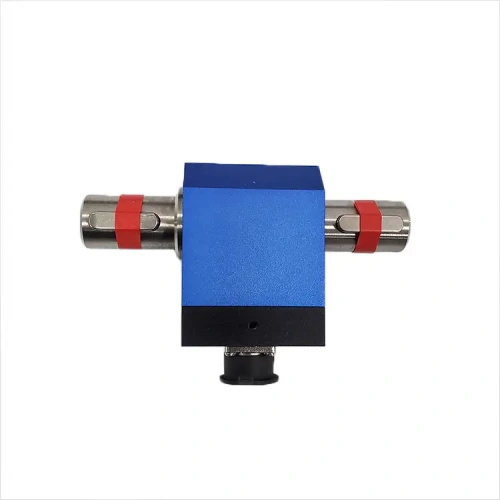
Rotary Torque Sensor Troubleshooting
A Rotary Torque Sensor operates under continuous rotation, making it vulnerable to issues related to high-speed operation.
Common troubleshooting steps include:
- Verify shaft alignment
- Check bearing condition
- Inspect wireless or slip ring communication
- Confirm proper mounting torque
- Monitor operating temperature
Poor shaft alignment can create additional mechanical stress that eventually affects measurement accuracy.
Reaction Torque Sensor Inspection
Unlike rotating sensors, a Reaction Torque Sensor measures stationary torque.
Inspection should focus on:
- Mounting rigidity
- Mechanical deformation
- Fastener tightness
- Alignment with the loading system
- Calibration consistency
Improper installation is one of the leading causes of inaccurate reaction torque measurements.
Preventive Maintenance Tips
Preventive maintenance greatly extends sensor service life.
Recommended practices include:
- Perform scheduled calibration
- Avoid exceeding rated torque
- Keep connectors clean
- Protect sensors from moisture and dust
- Monitor operating temperature
- Inspect mounting hardware regularly
- Record measurement trends over time
Working closely with an experienced Torque Sensor Manufacturer helps establish an effective maintenance schedule based on actual operating conditions.
When Should You Replace a Torque Sensor?
Replacement may be necessary when:
- Calibration no longer restores accuracy
- Mechanical damage is visible
- Internal electronics have failed
- Measurement repeatability cannot be achieved
- Repair costs exceed replacement value
Selecting a high-quality sensor from a trusted Torque Sensor Supplier helps improve long-term reliability and reduces unexpected downtime.
Conclusion
A faulty Torque Sensor can reduce measurement accuracy, affect product quality, and increase maintenance costs. Warning signs such as unstable readings, incorrect zero output, signal interruptions, and physical damage should never be ignored. Whether using a Rotary Torque Sensor, Reaction Torque Sensor, or Dynamic Torque Sensor, regular inspection, calibration, and preventive maintenance are essential for reliable operation. Partnering with a dependable Torque Sensor Factory and experienced Torque Sensor Manufacturer ensures access to high-quality products, technical support, and accurate torque measurement solutions for demanding industrial applications.
FAQ
What is the most common symptom of a faulty torque sensor?
Unstable readings, incorrect zero values, and intermittent signal loss are among the most common indicators of a faulty torque sensor.
Can a damaged torque sensor be repaired?
Minor issues such as loose connectors or damaged cables may be repaired. However, sensors with permanent internal deformation or severe electronic damage often require replacement.
How often should Torque Sensors be calibrated?
Calibration intervals depend on usage and industry requirements. Many industrial users perform calibration every 6 to 12 months or after any overload event.
Does overload permanently damage a Dynamic Torque Sensor?
Yes. Excessive torque can permanently deform the sensing element, reducing accuracy and shortening the sensor's service life.
Why choose a professional Torque Sensor Manufacturer?
A professional manufacturer provides accurate calibration, technical support, product customization, quality assurance, and reliable after-sales service, helping users achieve consistent and dependable torque measurements.