

What Is a Wireless Torque Sensor?
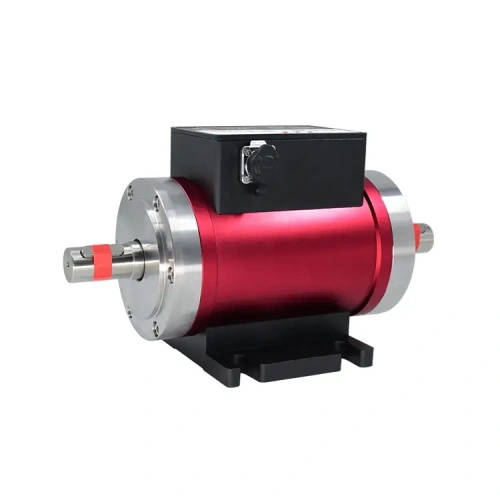
A wireless torque sensor is a measurement device that detects the torque applied to a rotating shaft and transmits the collected data wirelessly to a receiver or monitoring system. Unlike conventional wired Torque Sensors, wireless models eliminate the need for slip rings, rotating connectors, or complex wiring systems.
Modern wireless sensors often combine strain gauge technology, digital signal processing, and wireless communication protocols to deliver stable measurement results even under continuous rotation. Many industries choose wireless solutions because they simplify equipment design while maintaining high measurement accuracy.
A professional Torque Sensor Manufacturer typically offers both wireless and wired solutions to meet different industrial requirements, ranging from laboratory testing to production-line monitoring.
Reduced Mechanical Complexity
One of the greatest advantages of wireless torque sensors is their simplified mechanical structure.
Traditional wired systems require slip rings or rotary connectors to transfer signals from rotating shafts. These components experience wear over time and require regular maintenance. Wireless transmission removes these limitations by sending measurement data directly to the receiver.
Benefits include:
- Fewer moving components
- Lower maintenance costs
- Reduced downtime
- Improved system reliability
- Easier installation
For companies seeking long-term operational efficiency, many Torque Sensor Supplier companies recommend wireless solutions for continuously rotating equipment.
Improved Measurement Accuracy
Wireless communication technology has advanced significantly over recent years. High-quality wireless Torque Sensors provide stable data transmission with minimal signal loss or interference.
Accurate torque measurement is particularly important for:
- Engine testing
- Electric motor evaluation
- Gearbox performance analysis
- Robotics
- Aerospace systems
Because no physical electrical contact exists between rotating parts and stationary equipment, measurement errors caused by worn slip rings can be greatly reduced.
Better Performance in High-Speed Applications
High-speed rotating machinery creates challenges for traditional wiring systems. Mechanical friction, cable fatigue, and electrical noise can all affect measurement quality.
Wireless sensors perform exceptionally well in applications such as:
- High-speed motors
- Turbines
- Racing engines
- Industrial spindles
- Wind power systems
A Rotary Torque Sensor equipped with wireless transmission allows engineers to monitor torque continuously without interrupting machine operation.
Easier Installation and System Integration
Wireless torque sensors simplify installation because fewer cables are required.
Instead of routing signal cables through rotating shafts, technicians simply install the sensor and pair it with the receiver.
Advantages include:
- Faster setup
- Reduced wiring errors
- Cleaner machine layouts
- Lower installation costs
- Greater flexibility during equipment upgrades
Many manufacturers integrate wireless sensors directly into automated production systems, reducing engineering time while improving production efficiency.
Suitable for Dynamic Torque Measurement
Many industrial applications involve continuously changing torque loads rather than constant values.
Wireless Dynamic Torque Sensor solutions are specifically designed for measuring torque under rotating and varying load conditions.
Typical applications include:
- Electric vehicle testing
- Motor durability testing
- Transmission efficiency analysis
- Servo system evaluation
- Industrial automation
Dynamic measurement helps engineers understand real operating conditions rather than static laboratory values.
Lower Maintenance Requirements
Since wireless systems eliminate slip rings and contact brushes, routine maintenance requirements decrease significantly.
Maintenance advantages include:
- Less component wear
- Longer service life
- Reduced replacement costs
- Higher equipment availability
Working with an experienced Torque Sensor Factory ensures access to products designed for long-term industrial operation with dependable wireless performance.
Enhanced Safety
Wireless transmission also improves workplace safety.
Without rotating electrical cables, operators face fewer risks related to cable damage, entanglement, or connector failures.
This benefit is especially valuable in:
- Automated production lines
- Robotics
- Heavy industrial machinery
- Aerospace testing
- Research laboratories
Reliable wireless communication allows engineers to monitor equipment remotely without approaching rotating machinery.
Wireless vs. Reaction Torque Sensors
Although wireless technology offers many advantages, selecting the appropriate sensor type depends on the application.
A Reaction Torque Sensor measures torque without continuous shaft rotation. These sensors are commonly used for static testing, valve torque measurement, fastening systems, and calibration equipment.
Wireless rotary sensors are better suited for rotating machinery, while reaction sensors remain an excellent choice for stationary torque measurement.
Many industrial testing facilities use both sensor types to cover different testing requirements.
Choosing the Right Torque Sensor Supplier
Selecting the right supplier is as important as choosing the sensor itself.
Consider the following factors:
- Measurement accuracy
- Torque range
- Wireless communication stability
- Environmental protection rating
- Calibration services
- Technical support
- Industry certifications
- Customization capabilities
A reliable Torque Sensor Manufacturer can recommend the most suitable sensor based on application speed, load conditions, installation space, and communication requirements.
Conclusion
Wireless Torque Sensors have transformed torque measurement by providing greater flexibility, reduced maintenance, and reliable data transmission for rotating machinery. Whether used as a Rotary Torque Sensor for high-speed applications or combined with a Dynamic Torque Sensor system for real-time monitoring, wireless technology delivers significant operational advantages. Choosing an experienced Torque Sensor Supplier or Torque Sensor Factory helps ensure accurate measurements, dependable performance, and long service life across industrial, automotive, aerospace, and research applications.
FAQ
What industries commonly use wireless torque sensors?
Wireless torque sensors are widely used in automotive testing, robotics, aerospace, industrial automation, renewable energy, research laboratories, and electric motor development.
Are wireless torque sensors as accurate as wired models?
Yes. Modern wireless Torque Sensors provide excellent accuracy and stable data transmission, making them suitable for demanding industrial applications.
What is the difference between a Rotary Torque Sensor and a Reaction Torque Sensor?
A Rotary Torque Sensor measures torque on rotating shafts during operation, while a Reaction Torque Sensor measures stationary or non-rotating torque.
Can wireless sensors measure dynamic torque?
Yes. A Dynamic Torque Sensor is specifically designed to measure continuously changing torque during machine operation.
How do I choose a reliable Torque Sensor Manufacturer?
Look for manufacturers with extensive industry experience, calibration capabilities, technical support, customization services, and proven product quality for your specific application.