

In many industrial environments,traditional pressure sensors are sufficient for monitoring gases or liquids under moderate temperature conditions.However,plastic extrusion presents a completely different challenge.Molten polymers behave unlike standard fluids,and using conventional pressure sensors in this environment often leads to inaccurate readings,frequent failures,or hidden process issues.Knowing when to replace traditional pressure sensors with a melt pressure transducer can significantly improve both production stability and equipment longevity.
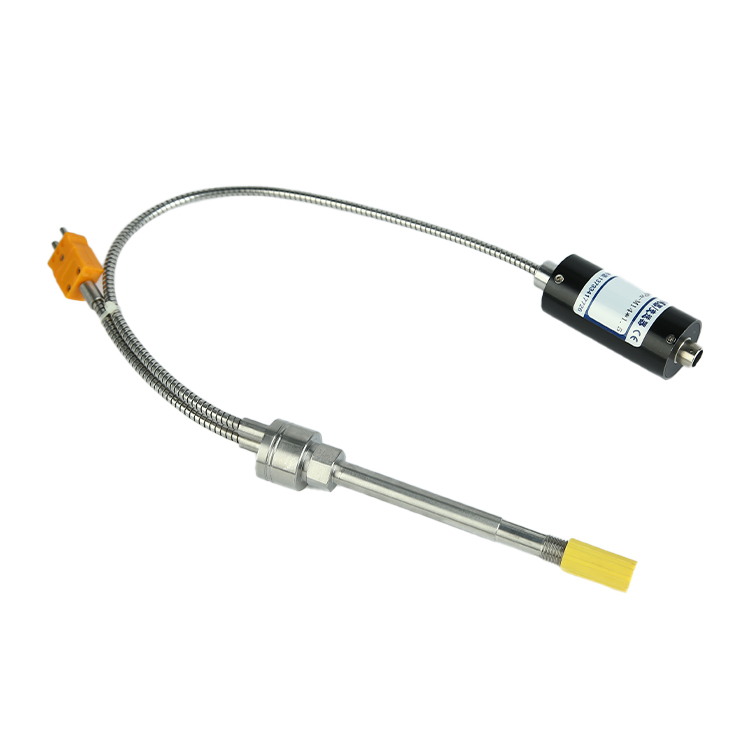
One clear sign that a traditional pressure sensor is no longer suitable is inconsistent or drifting pressure readings.In extrusion applications,temperature fluctuations can heavily influence sensor accuracy.Conventional sensors are typically not designed to compensate for extreme heat,causing signal drift over time.A dedicated melt pressure sensor includes thermal isolation and temperature compensation features that maintain accuracy even when exposed to continuous high temperatures.
Frequent sensor failure is another strong indicator.If pressure sensors require regular replacement due to diaphragm damage,signal loss,or electrical instability,the root cause is often environmental mismatch.Molten polymer can be abrasive,chemically aggressive,and prone to buildup.An extrusion pressure transducer is specifically engineered with flush-mounted diaphragms and robust materials to resist these conditions,making it a more reliable long-term solution.
Process control challenges also signal the need for an upgrade.If operators are constantly adjusting screw speed,temperature,or throughput to compensate for unstable output,inadequate pressure feedback may be part of the problem.Traditional pressure sensors often lack the response speed or resolution needed for real-time extrusion control.Melt pressure transducers,on the other hand,provide fast and precise pressure data that integrates seamlessly with PLC or DCS systems for closed-loop control.
Another situation where replacement becomes necessary is when product quality requirements increase.As customers demand tighter tolerances and more consistent performance,pressure measurement accuracy becomes more critical.Traditional sensors may be adequate for rough monitoring,but they often cannot deliver the precision required for high-end extrusion applications such as medical tubing,optical films,or multilayer structures.In these cases,upgrading to a high-accuracy melt pressure transducer directly supports improved product consistency.
Equipment upgrades or line expansions are also ideal moments to reconsider pressure measurement solutions.When installing new dies,higher-capacity extruders,or advanced control systems,relying on outdated sensors can limit the performance of otherwise modern equipment.Integrating melt pressure sensors at this stage ensures that pressure data matches the capabilities of the new system,maximizing return on investment.
Safety considerations should never be underestimated.Traditional pressure sensors may fail silently under extreme conditions,providing false confidence.Melt pressure transducers are designed for continuous operation at high temperature and pressure,offering more reliable protection against overpressure events.For extrusion lines handling high-viscosity materials or operating at elevated pressures,this reliability can be critical in preventing accidents and equipment damage.
Cost analysis also supports replacement in many cases.While a melt pressure transducer may have a higher upfront cost than a basic pressure sensor,its longer lifespan,reduced downtime,and improved process efficiency often result in lower total cost of ownership.Fewer sensor replacements,less scrap material,and reduced maintenance interruptions all contribute to measurable long-term savings.
In extrusion environments where recycled materials or varying material batches are used,pressure behavior can change significantly from run to run.Traditional pressure sensors may struggle to capture these variations accurately.A dedicated extrusion pressure transducer provides stable and repeatable measurements,allowing operators to adjust parameters quickly and maintain consistent output despite material variability.
Replacing traditional pressure sensors with melt pressure transducers is not merely a technical upgrade—it is a strategic decision.When extrusion processes demand higher accuracy,better reliability,improved safety,and deeper process insight,melt pressure transducers become the logical choice.For manufacturers looking to future-proof their extrusion operations,the transition is often not a question of if,but when.